

十月 4, 2026
金融素養能否讓非正式部門企業和勞工進入正式經濟?
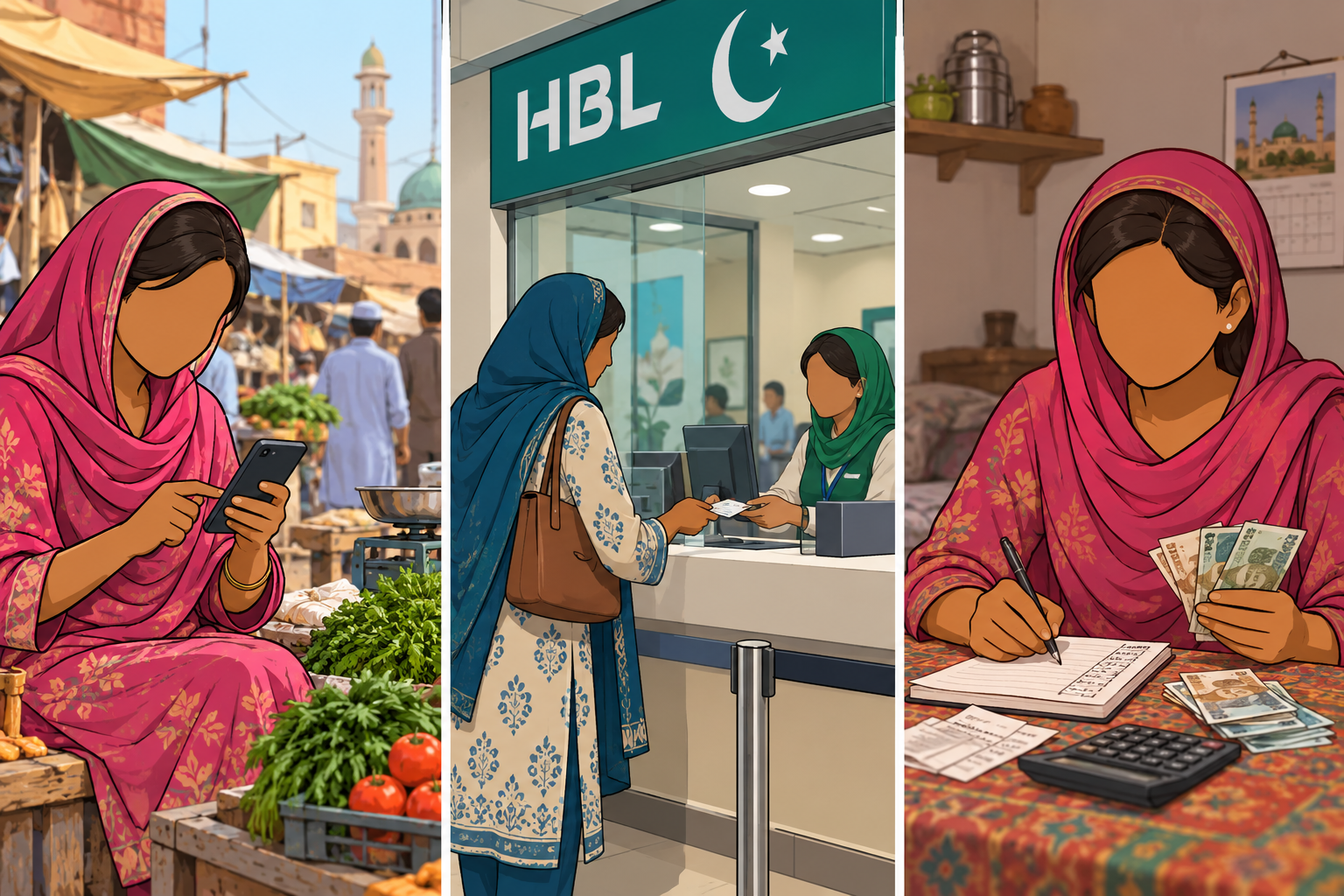
一份來自巴基斯坦的最新報告,指出他們金融素養率偏低,引起了我的注意。雖然該報告未明確說明因果途徑,但作者提出了一個有趣的問題:提升金融素養是否真的能將經濟活動從非正式轉為正式(Rauf 與 Ali 2026)?在巴基斯坦,金融素養水準尤其偏低。根據世界銀行全球金融指數資料庫2025年數據,只有18%的巴基斯坦成年人沒有正式銀行帳戶。巴基斯坦銀行帳戶的性別差距也非常明顯,只有9.5%的女性擁有正式銀行帳戶。
Dupas 與 Robinson (2013) 的一篇著名論文顯示,女性從儲蓄帳戶中獲益顯著。擁有帳戶有助於保護她們的資金免受外界影響和竊盜。根據研究,顯然全球許多女性會從擁有儲蓄帳戶中受益,尤其是低成本或免費的儲蓄帳戶。
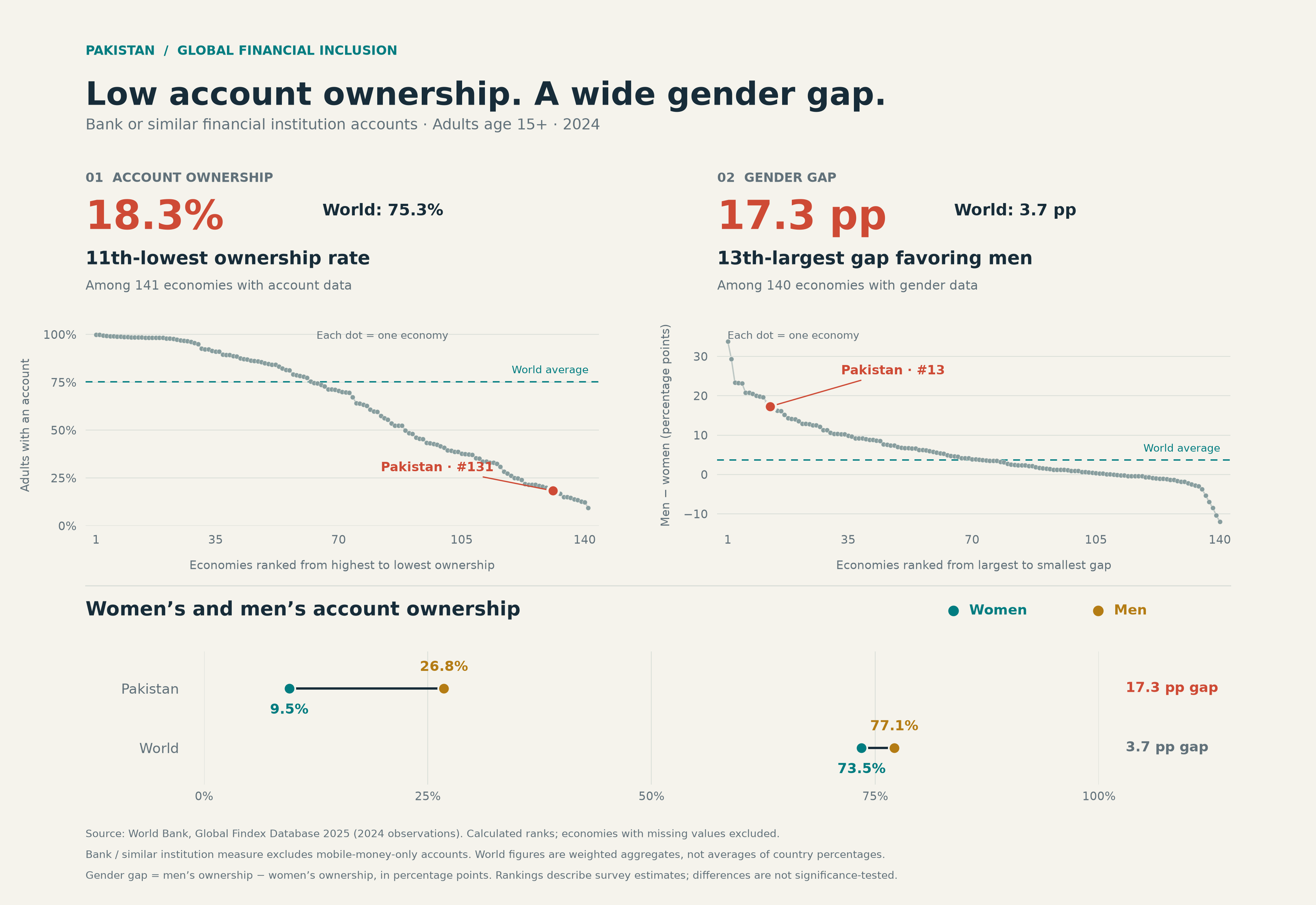
這讓所有巴基斯坦人民的財務知識都有很大的成長空間,而不僅僅是巴基斯坦女性。這正是 Dollar Scholars 發揮作用的地方。Dollar Scholars 的課程和網站已經提供烏爾都語版本,烏爾都語是巴基斯坦全國通用的語言,也是巴基斯坦的官方語言,雖然還有其他語言少數群體。
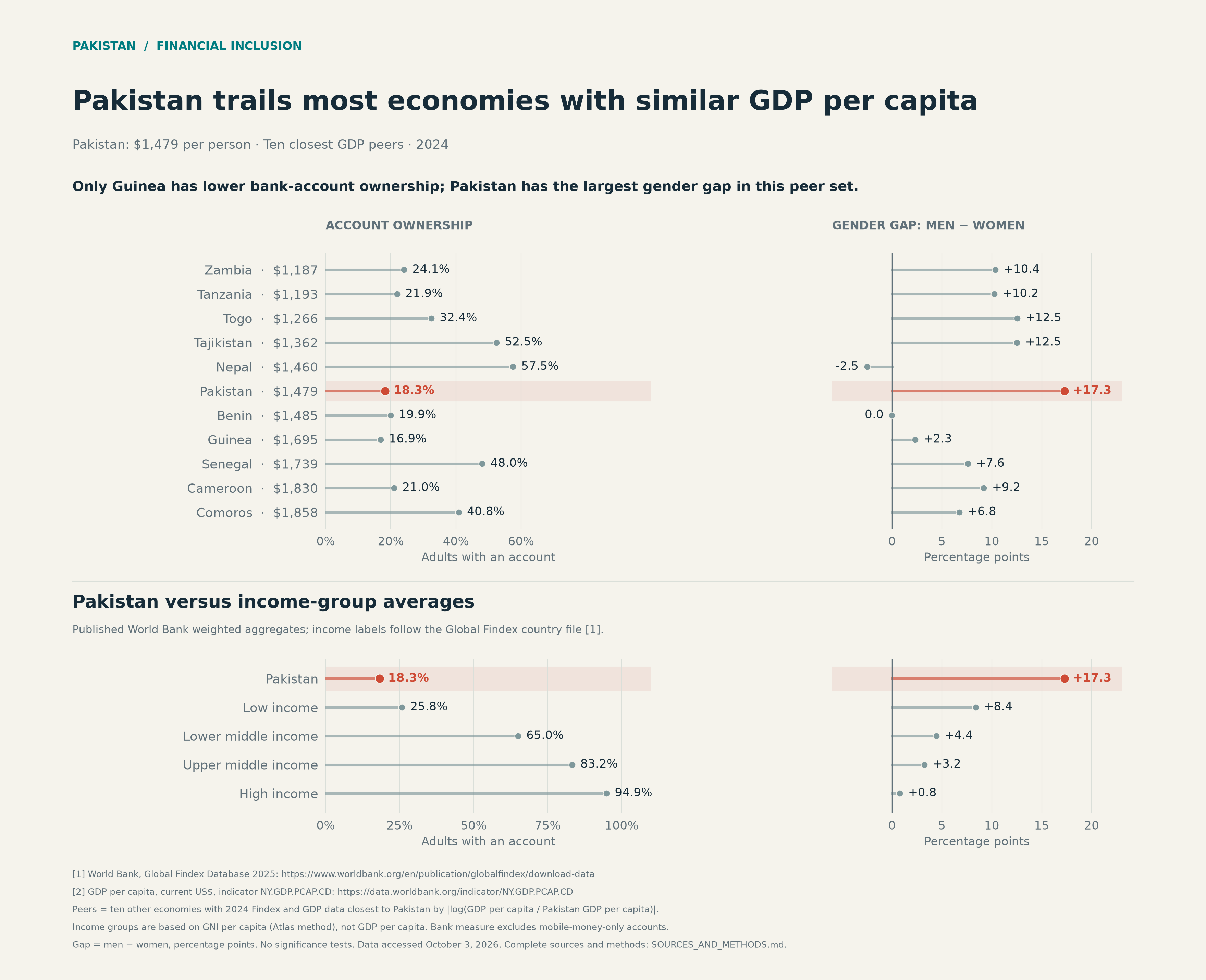
但提升金融素養是否能促使企業從非正式轉為正式?或是勞工從非正式就業轉為正式就業?通常,教育與選擇正式或非正式部門工作有關。金融素養作為正式/非正式工作選擇的直接因素,尚未被測試。不過不難想像,與稅務相關的金融素養提升,可能是個人或企業從非正式經濟活動轉向正式經濟活動的動力。關於非正式部門經濟,確實有豐富的文獻。David McKenzie 及其他人努力評估企業或個人從事非正式經濟而非正式經濟的原因。請參閱下方參考文獻以獲得相關閱讀。
展望未來,關於非正式部門的問題將持續存在。Dollar Scholars 不會消失,因此我們會持續推動金融教育與非正式部門與正式部門工作者及企業之間的關係。我們計劃與巴基斯坦的報告作者聯繫,合作分享資訊。
參考資料
- Benhassine, Najy, David McKenzie, Victor Pouliquen, and Massimiliano Santini. 2018. “Does Inducing Informal Firms to Formalize Make Sense? Experimental Evidence from Benin.” Journal of Public Economics 157: 1–14. https://doi.org/10.1016/j.jpubeco.2017.11.004.
- Bruhn, Miriam. 2011. “License to Sell: The Effect of Business Registration Reform on Entrepreneurial Activity in Mexico.” The Review of Economics and Statistics 93 (1): 382–386.
- Campos, Francisco, Markus Goldstein, and David McKenzie. 2023. “How Should the Government Bring Small Firms into the Formal System? Experimental Evidence from Malawi.” Journal of Development Economics. https://doi.org/10.1016/j.jdeveco.2022.103045.
- de Mel, Suresh, David McKenzie, and Christopher Woodruff. 2013. “The Demand for, and Consequences of, Formalization among Informal Firms in Sri Lanka.” American Economic Journal: Applied Economics 5 (2): 122–150. https://doi.org/10.1257/app.5.2.122.
- Dupas, Pascaline, and Jonathan Robinson. 2013. “Savings constraints and microenterprise development: Evidence from a field experiment in Kenya.” American Economic Journal: Applied Economics 5 (1): 163–192.
- Monteiro, Joana C. M., and Juliano J. Assunção. 2012. “Coming out of the Shadows? Estimating the Impact of Bureaucracy Simplification and Tax Cut on Formality in Brazilian Microenterprises.” Journal of Development Economics 99 (1): 105–115. https://doi.org/10.1016/j.jdeveco.2011.10.002.
- Natural Earth. 無日期。. “Admin 0 – Countries.” Geospatial dataset, scale 1:50 million. https://www.naturalearthdata.com/downloads/50m-cultural-vectors/50m-admin-0-countries-2/.
- Rauf, Usama Abdul, and Rafia Ali. 2026. “Shrinking the Shadow Economy: How Financial Inclusion Can Shrink the Shadow Economy.” Knowledge Brief 2026: 143. Pakistan Institute of Development Economics (PIDE). https://file.pide.org.pk/pdfpideresearch/kb-143-shrinking-the-shadow-economy-how-financial-inclusion-can-shrink-the-shadow-economy.pdf.
- Rocha, Rudi, Gabriel Ulyssea, and Laísa Rachter. 2018. “Do Lower Taxes Reduce Informality? Evidence from Brazil.” Journal of Development Economics 134: 28–49. https://doi.org/10.1016/j.jdeveco.2018.04.003.
- Ulyssea, Gabriel. 2018. “Firms, Informality, and Development: Theory and Evidence from Brazil.” American Economic Review 108 (8): 2015–2047. https://doi.org/10.1257/aer.20141745.
- World Bank. 2025. “Global Findex Database 2025: Country-Level Data.” Dataset. https://www.worldbank.org/en/publication/globalfindex/download-data.
- World Bank. 無日期。. “World Development Indicators: GDP per Capita (Current US$).” Dataset. https://data.worldbank.org/indicator/NY.GDP.PCAP.CD.