

10월 4, 2026
금융 문해력이 비공식 부문 기업과 노동자를 공식 경제로 끌어들일 수 있을까요?
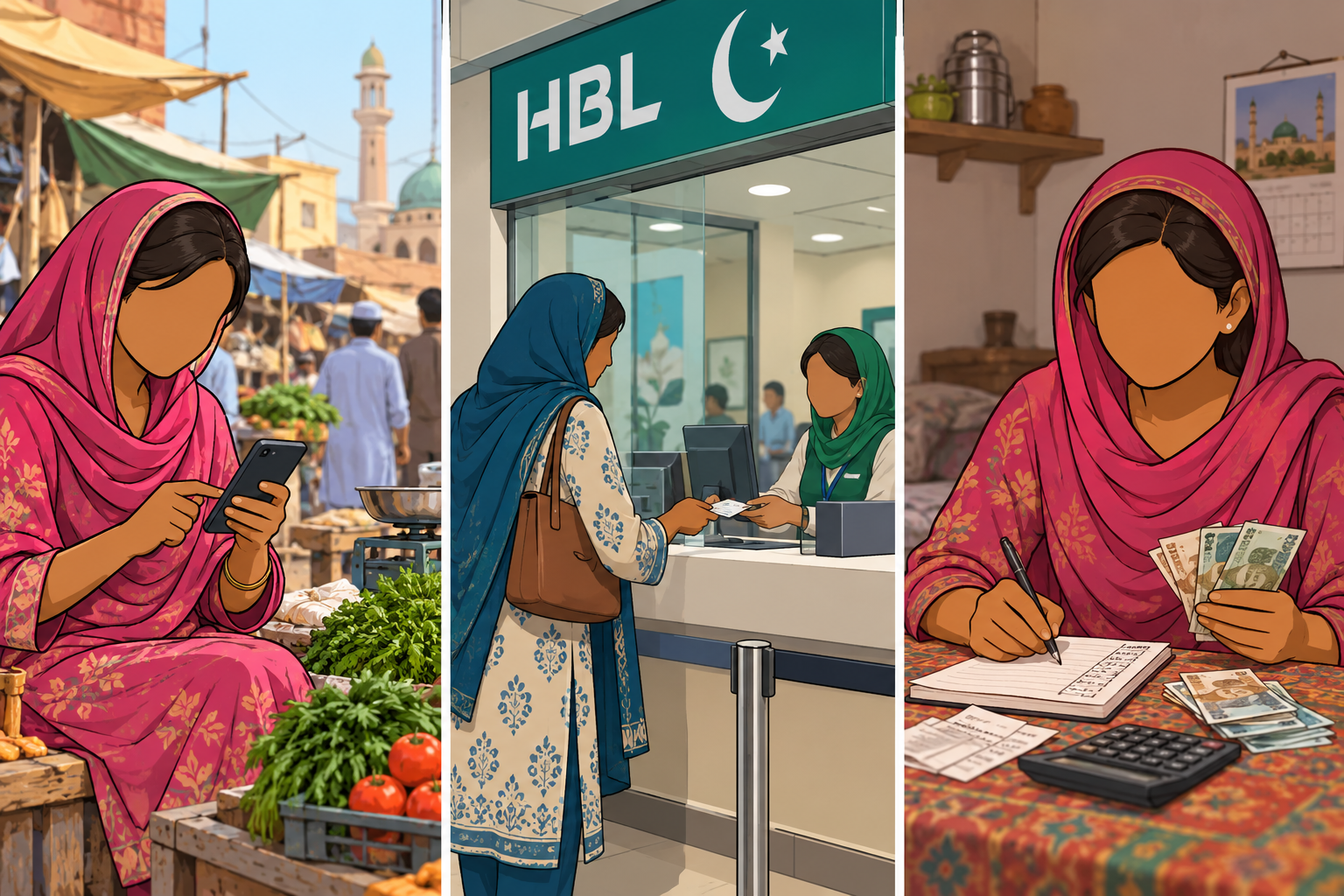
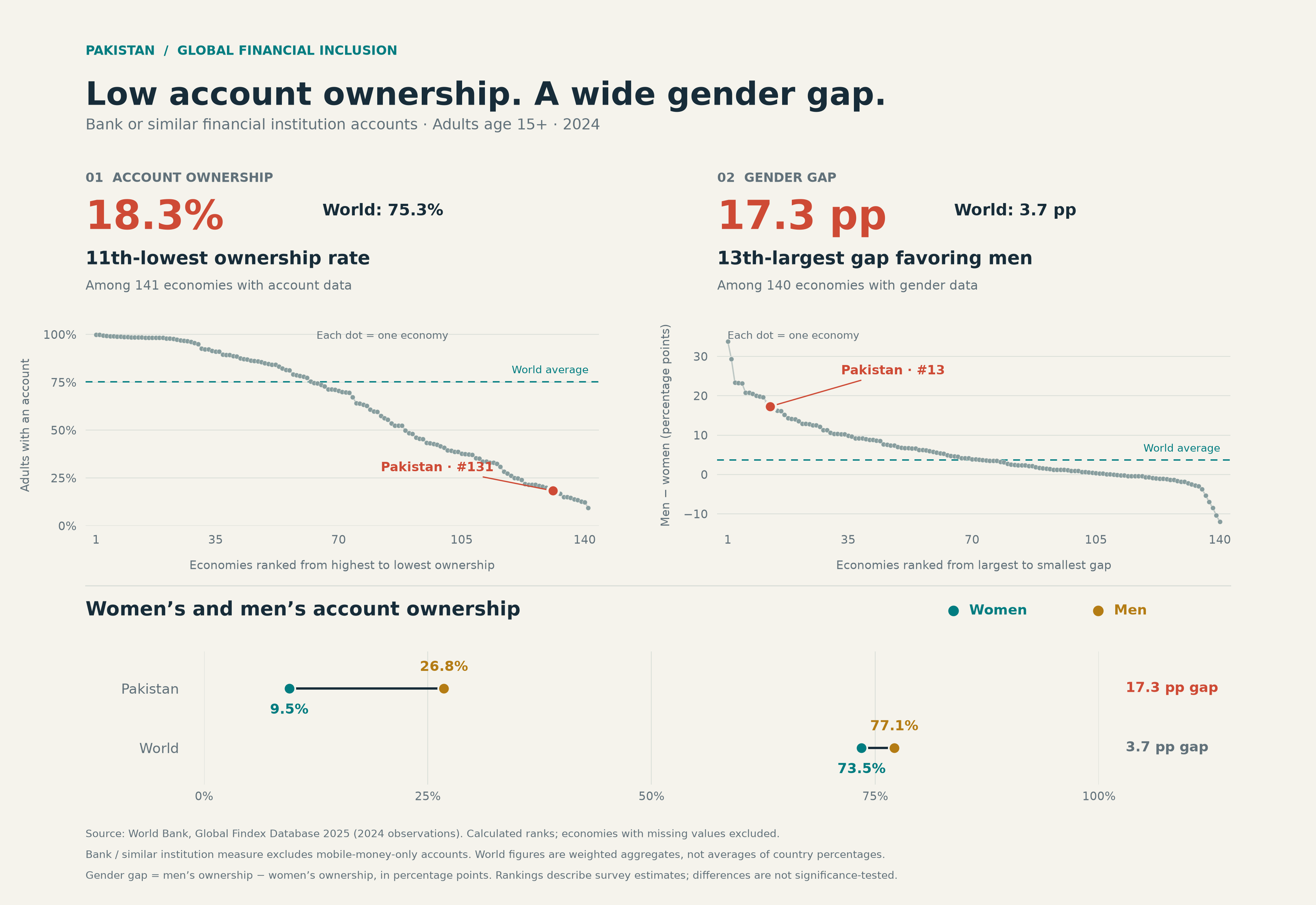
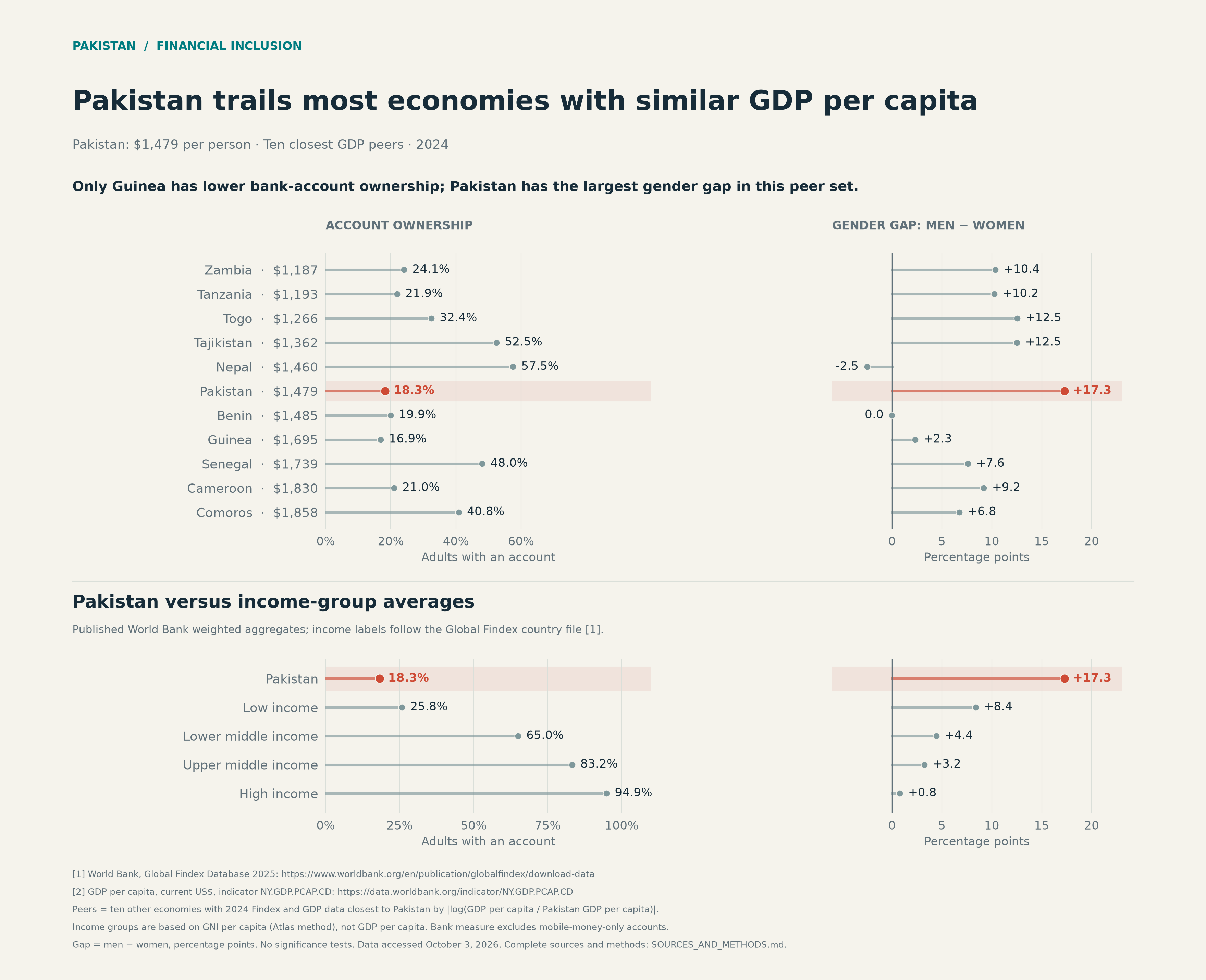
최근 파키스탄에서 발표된 낮은 금융 문해율에 관한 보고서가 제 눈길을 끌었습니다. 보고서가 인과관계를 명확히 제시하지는 않았지만, 저자들은 흥미로운 질문을 제기합니다: 금융 문해력 향상이 경제 활동을 비공식 (Rauf Ali 2026)에서 공식 으로 실제로 전환할 수 있을까요? 파키스탄에서는 금융 문해력 수준이 특히 낮습니다. 세계은행 글로벌 Findex 데이터베이스 2025 데이터에 따르면 파키스탄 성인 중 공식 은행 계좌가 없는 비율은 18%에 불과합니다. 파키스탄 은행 계좌 내 성별 격차도 매우 뚜렷하며, 여성 중 공식 은행 계좌를 가진 비율은 9.5%에 불과합니다.
Dupas Robinson (2013)의 유명한 논문은 여성들이 저축 계좌를 갖는 것이 상당한 혜택을 준다는 것을 보여줍니다. 계좌를 보유하면 외부의 영향과 도난으로부터 돈을 보호할 수 있습니다. 연구에 따르면 전 세계 많은 여성들이 특히 저렴하거나 비용 없이 저축 계좌를 갖는 것이 도움이 될 것임이 분명해 보입니다.
이로 인해 파키스탄 여성뿐만 아니라 모든 파키스탄 국민의 금융 지식 측면에서 성장할 여지가 많습니다. 바로 이 점에서 달러 스칼라스가 역할을 합니다. 달러 스칼라스의 강의와 웹사이트는 이미 우르두어로 제공되고 있는데, 우르두어는 파키스탄 전역에서 사용되는 언어이자 파키스탄의 공식 언어이기도 합니다. 다만 다른 언어적 소수민족도 존재합니다.
하지만 금융 문해력 향상이 기업을 비공식적 고용에서 공식적 고용으로 전환하게 만들 수 있을까요? 또는 근로자가 비공식적으로 고용된 상태에서 공식적으로 고용되는 것으로 전환할 수 있을까요? 일반적으로 교육은 공식 또는 비공식 부문 직업 선택과 관련이 있습니다. 금융 문해력이 공식/비공식 직업 선택의 직접적 요인으로서 아직 검증된 바는 없습니다. 하지만 세금과 관련된 금융 문해력 향상이 개인이나 기업이 비공식 경제 활동에서 공식 경제 활동으로 전환하는 동기가 될 수 있다는 점은 충분히 상상할 수 있습니다. 비공식 부문 경제에 관한 풍부한 문헌이 존재합니다. 데이비드 맥켄지 등 연구자들은 기업이나 개인이 공식 경제보다 비공식 경제에 참여하게 만드는 요인을 평가하기 위해 열심히 노력해 왔습니다. 이 주제에 대한 추가 참고문헌은 아래 참고 문헌을 참고하세요.
앞으로도 비공식 부문에 관한 많은 질문이 계속될 것입니다. Dollar Scholars는 사라지지 않을 것이므로, 금융 교육과 비공식 부문 및 공식 부문 근로자 및 기업 간의 관계에 대한 질문을 계속 추궁할 것입니다. 우리는 파키스탄의 보고서 저자들과 연락하여 협력하고 정보를 공유할 계획입니다.
참고문헌
- Benhassine, Najy, David McKenzie, Victor Pouliquen, and Massimiliano Santini. 2018. “Does Inducing Informal Firms to Formalize Make Sense? Experimental Evidence from Benin.” Journal of Public Economics 157: 1–14. https://doi.org/10.1016/j.jpubeco.2017.11.004.
- Bruhn, Miriam. 2011. “License to Sell: The Effect of Business Registration Reform on Entrepreneurial Activity in Mexico.” The Review of Economics and Statistics 93 (1): 382–386.
- Campos, Francisco, Markus Goldstein, and David McKenzie. 2023. “How Should the Government Bring Small Firms into the Formal System? Experimental Evidence from Malawi.” Journal of Development Economics. https://doi.org/10.1016/j.jdeveco.2022.103045.
- de Mel, Suresh, David McKenzie, and Christopher Woodruff. 2013. “The Demand for, and Consequences of, Formalization among Informal Firms in Sri Lanka.” American Economic Journal: Applied Economics 5 (2): 122–150. https://doi.org/10.1257/app.5.2.122.
- Dupas, Pascaline, and Jonathan Robinson. 2013. “Savings constraints and microenterprise development: Evidence from a field experiment in Kenya.” American Economic Journal: Applied Economics 5 (1): 163–192.
- Monteiro, Joana C. M., and Juliano J. Assunção. 2012. “Coming out of the Shadows? Estimating the Impact of Bureaucracy Simplification and Tax Cut on Formality in Brazilian Microenterprises.” Journal of Development Economics 99 (1): 105–115. https://doi.org/10.1016/j.jdeveco.2011.10.002.
- Natural Earth. 날짜 미상. “Admin 0 – Countries.” Geospatial dataset, scale 1:50 million. https://www.naturalearthdata.com/downloads/50m-cultural-vectors/50m-admin-0-countries-2/.
- Rauf, Usama Abdul, and Rafia Ali. 2026. “Shrinking the Shadow Economy: How Financial Inclusion Can Shrink the Shadow Economy.” Knowledge Brief 2026: 143. Pakistan Institute of Development Economics (PIDE). https://file.pide.org.pk/pdfpideresearch/kb-143-shrinking-the-shadow-economy-how-financial-inclusion-can-shrink-the-shadow-economy.pdf.
- Rocha, Rudi, Gabriel Ulyssea, and Laísa Rachter. 2018. “Do Lower Taxes Reduce Informality? Evidence from Brazil.” Journal of Development Economics 134: 28–49. https://doi.org/10.1016/j.jdeveco.2018.04.003.
- Ulyssea, Gabriel. 2018. “Firms, Informality, and Development: Theory and Evidence from Brazil.” American Economic Review 108 (8): 2015–2047. https://doi.org/10.1257/aer.20141745.
- World Bank. 2025. “Global Findex Database 2025: Country-Level Data.” Dataset. https://www.worldbank.org/en/publication/globalfindex/download-data.
- World Bank. 날짜 미상. “World Development Indicators: GDP per Capita (Current US$).” Dataset. https://data.worldbank.org/indicator/NY.GDP.PCAP.CD.