


دعم الحسابات البنكية مقابل التعليم المالي
Though sometimes the standard for research in economics can be excruciatingly high, I am encouraged by a lot of the interesting research I see from colleagues in the discipline. A paper I recently came across by authors Shawn Cole, Thomas Sampson, and Bilal Zia (Cole et al. 2011) uses a randomized controlled trial to study the effects of financial education and the effects of a bank account subsidy paired together. This piqued my interest. Obviously it would be convenient if financial education was the best and only solution to boosting financial inclusion, but my training and my critical thinking tell me this can never be true. In this case, it was an older paper, however it excites me to see that other authors in the economics literature were addressing difficult questions related to financial literacy. What did they find? And what were the limitations and further questions associated with their findings?
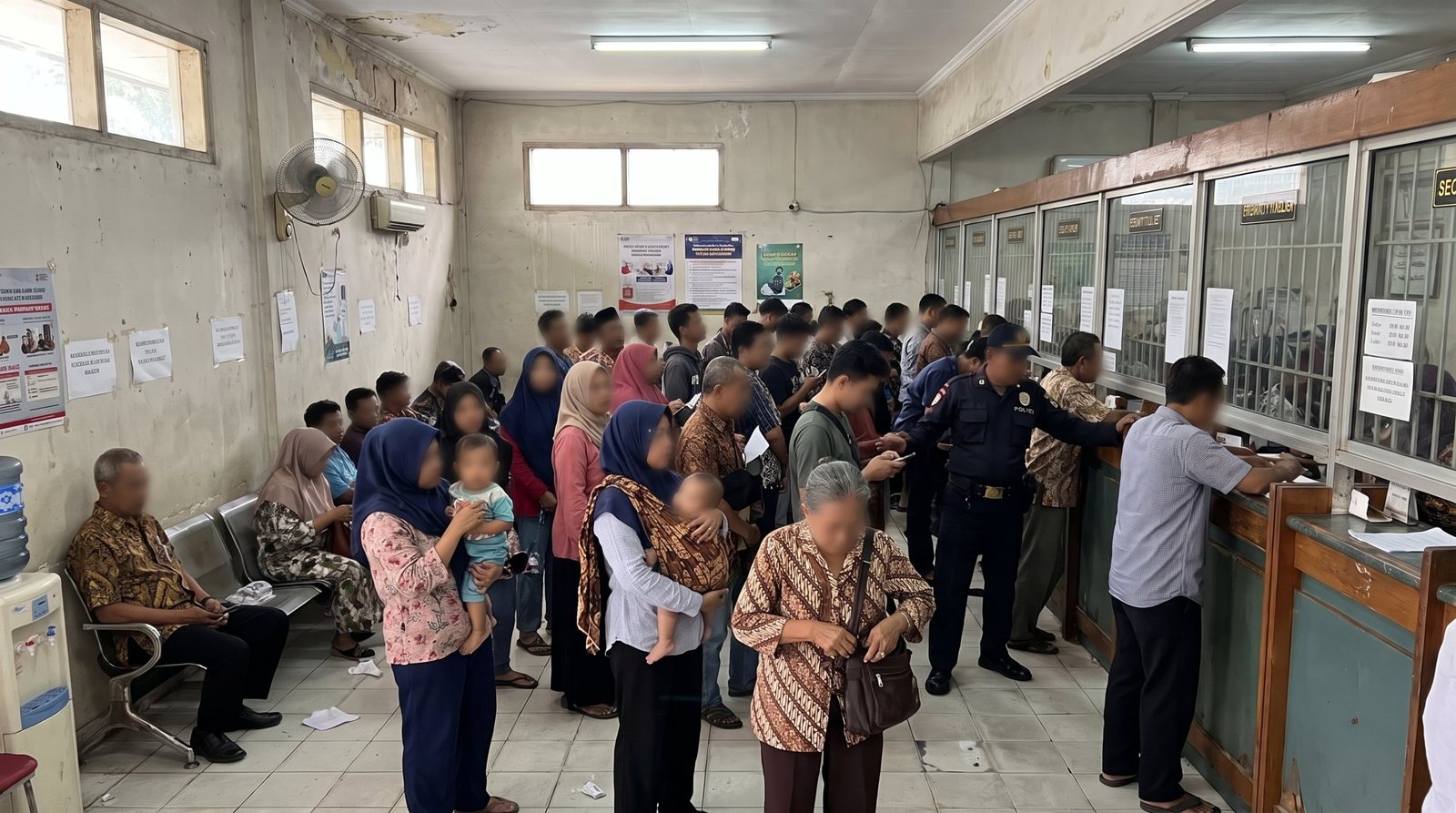
The authors studied the Indonesian context measuring about 500 households in between July and December 2007. One group received no intervention at all (control), one group received offers for subsidized bank accounts (treatment 1), one group received basic financial education (treatment 2), and one group received both offers for subsidized bank accounts and basic financial education (treatment 3). The authors intended to gauge how likely participants were to hold a bank account after receiving one of the treatments.

The authors find that financial literacy is low in Indonesia where around 52% of questions on a standard financial literacy test get answered correctly. In India, individuals responded correctly to only 34% of financial literacy questions. It is hard to get similar data from that time frame from the United States, however the most comparable data I was able to find are from the Financial Literacy Around the World report which rates the United States as having 57% of individuals who are financially literate, Indonesia as having 32% of the population financially literate, and India as having 24% of the population financially literate (Klapper et al. 2015).
Short-Term Impacts
Focusing on the study itself, the authors find that individuals who are offered an incentive of 125000 rupees increased the uptake of bank accounts by around 13.7% in India while in Indonesia the subsidy of $14 US yielded a similar impact. Financial education alone did not increase substantially the share of individuals who opened a formal bank account.
Long-Term Impacts
The authors find that bank accounts are sticky over a two-year follow-up period, meaning some individuals given higher initial subsidies continued using formal banking services. However other individuals, those with low financial literacy, may have opened bank accounts simply to receive the subsidy, and subsequently never used and then closed their bank accounts.
Fundamentally I am not sure I agree with the authors' asserted premise which is that financial education is intended to be a tool to expand the "depth and breadth of the financial system." I believe that financial education, looking at it from the perspective of a bank, is a tool to help motivate more responsible use of money and credit, which will in turn deliver better outcomes for the individual and the bank. I think of this as a win-win, and I do think the authors are careful not to devalue financial education as a whole.
Perhaps the most salient point in the paper, at least for me, comes when the authors say "this result has important implications for the desirability of subsidies as a tool to expand financial access: financial incentives alone may not be sufficient to draw uneducated households into the financial system as these households may simply claim the incentives without actually using the services." This is a really important point and, perhaps a topic for another day, this is consistent with the famous "Lucas Critique" where Nobel Laureate Robert Lucas articulated the need to incorporate how individuals behave strategically and are forward-looking into our economic models and empirical estimates.
From an economics point of view it is incredibly important to probe these kinds of questions so we can attempt to put some numbers to the benefits of using subsidies and financial education interventions. It is part of our modus operandi at Dollar Scholars to monitor, review, analyze and synthesize academic literature on financial education to better deliver services for our beneficiaries, and to deliver more cost-effective and cost-efficient solutions to raise financial literacy.
Importantly the authors refer to financial education as being relatively expensive. For us at Dollar Scholars, I am not sure their cost of $17 US per person for financial literacy training seems like a reasonable one. We are economists, after all, and it is our job to function and perform well under very tight resource constraints. If anything, economists should know that money and funding do not grow on trees!
المراجع
- Cole, Shawn, Thomas Sampson, and Bilal Zia. 2011. “Prices or knowledge? What drives demand for financial services in emerging markets?” The journal of finance 66 (6): 1933–1967.
- Klapper, Leora, Annamaria Lusardi, and Peter van Oudheusden. 2015. Financial Literacy Around the World: Insights from the Standard & Poor’s Ratings Services Global Financial Literacy Survey. Standard & Poor’s Ratings Services. https://gflec.org/wp-content/uploads/2015/11/Finlit_paper_16_F2_singles.pdf.